
Basic of exposing screen
Screen printing involves creating stencils on mesh screens to transfer designs onto surfaces like fabric or paper using ink.
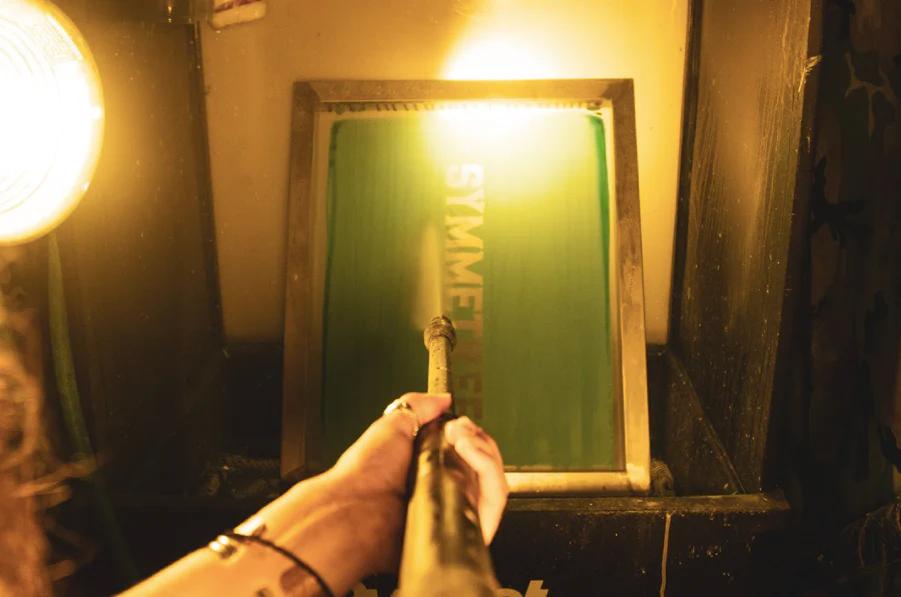
Rinse with cool water using a hose or pressure washer; unexposed areas (your design) dissolve, revealing open mesh.
Materials Needed
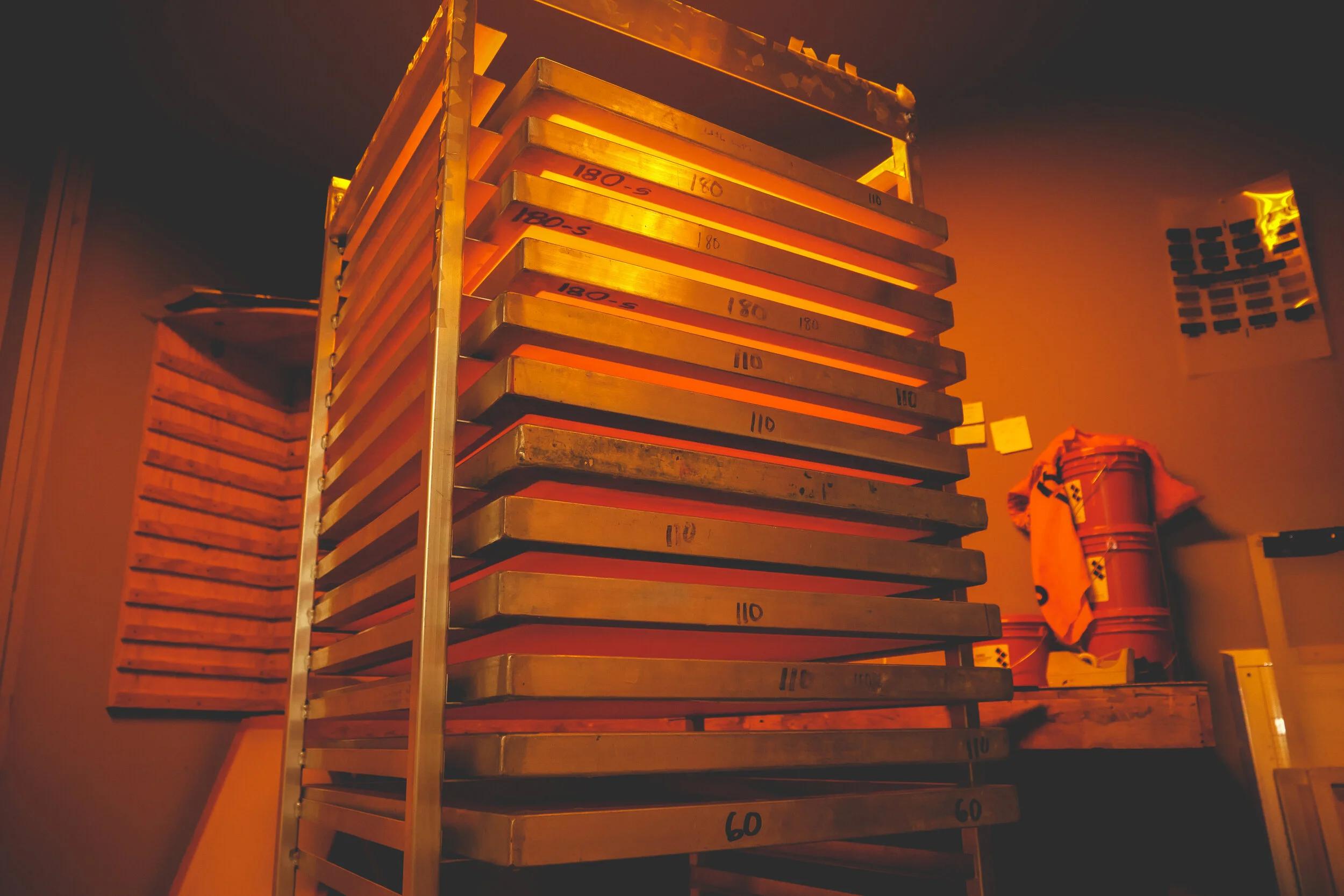
Gather a pre-stretched screen frame with mesh, photosensitive emulsion (diazo or dual-cure type), scoop coater, transparency film for your design (printed as a positive with black ink), UV light source (halogen or exposure unit), glass or Plexiglas sheet, spray bottle with water, and a darkroom or safe light area. Clean the screen thoroughly with degreaser first to ensure emulsion adhesion. Work in low light until exposure to avoid premature hardening.instructables+1
Coating the Screen
Pour emulsion into a scoop coater in a darkroom. Tilt the coater against the screen's bottom edge (print side down) and pull upward smoothly in one motion to coat evenly, repeating for the squeegee side. Aim for a thin, uniform layer—check by holding to light. Let it dry flat for 1-2 hours or overnight in the dark; tacky emulsion won't expose properly.screenprintworld+2
Preparing the Design
Print your artwork onto transparency film at high opacity (100% black for design areas). Flip the image horizontally for the print side exposure to ensure correct orientation. Test exposure times on scrap screens first, as they vary by light distance, bulb wattage, and emulsion (typically 5-15 minutes).mekanika+1[youtube]
Exposing the Screen
Place the screen emulsion-side up on a flat surface. Lay the transparency face-down on the emulsion (ink blocking light), then cover with glass to press it flat and prevent light bleed. Position UV light 2-3 feet away and expose for your tested time—underexposure washes out too much, overexposure resists washing.permaset+2
Washing and Checking
Rinse with cool water using a hose or pressure washer; unexposed areas (your design) dissolve, revealing open mesh. Gently rub with a sponge if needed. Dry the screen and inspect under light—hardened emulsion appears darker and tougher. Block any pinholes with tape before printing.instructables+2
Author
M Fahriza Ansyari
Disciplines
Screen Print, Tutorial